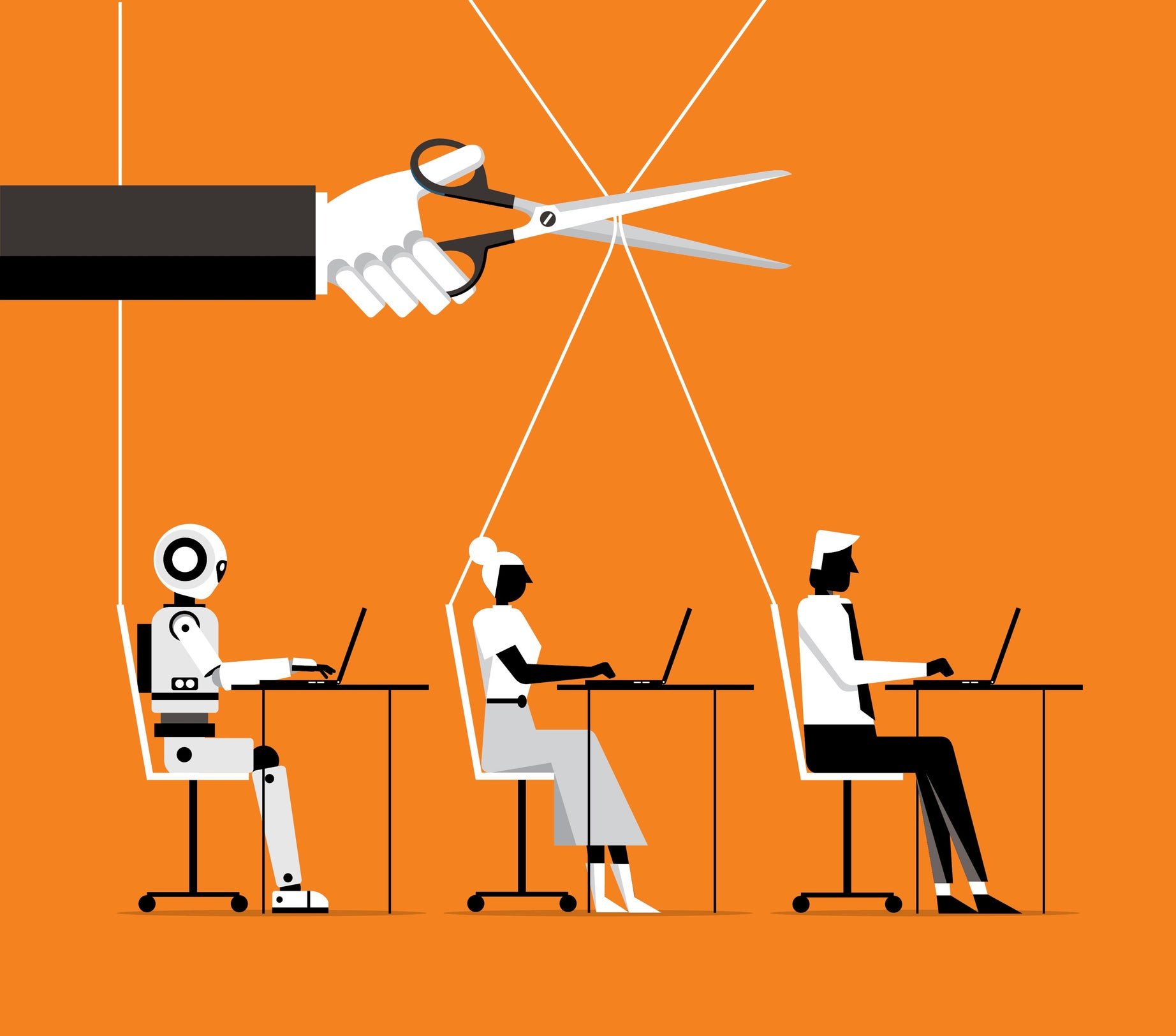
The story was supposed to be simple: artificial intelligence would become so powerful, so quickly, that a wave of white-collar layoffs was inevitable. And indeed, over the past eighteen months, a cascade of headlines announced job cuts with the explicit justification that AI tools could now perform tasks once reserved for human writers, customer service agents, coders, and analysts. But a surprising new trend is emerging from the corners of corporate America: employers who axed staff in the name of AI are now reversing those decisions, posting “urgent” job listings and quietly walking back their bold predictions of a human-free future.
According to a fresh report, a growing number of companies are discovering that the reality of enterprise AI integration is far messier than the sales pitch. After shedding experienced talent to trim costs and impress shareholders with AI-forward visions, these organizations are confronting an uncomfortable truth: generative AI models make mistakes, lack institutional knowledge, require constant human oversight, and — most critically — can’t replicate the nuanced judgment, creative problem-solving, and emotional intelligence that seasoned employees bring to complex tasks.

The shift is a humbling reminder that technology adoption doesn’t follow a straight line. Executives who loudly proclaimed that AI chatbots could handle all customer inquiries are now facing a surge of escalations and plummeting satisfaction scores. Firms that laid off junior developers in favor of AI coding assistants are watching error rates climb and project timelines slip as autonomous code generation creates more review work than it saves. Marketing teams gutted in favor of ChatGPT-generated copy are scrambling to rebuild human-led brand voices after consumers complained of bland, repetitive, or tone-deaf messaging. One after another, the cracks in the “full replacement” narrative have widened into canyons.
The original layoffs were driven by a mix of genuine technological optimism and classic cost-cutting opportunism. As ChatGPT, GitHub Copilot, and enterprise tools like Microsoft 365 Copilot demonstrated remarkable capabilities, boardrooms saw a chance to flatten hierarchies and reallocate salaries toward software subscriptions. The math seemed irresistible: a $30-per-month AI seat versus a $70,000 salary. But the math didn’t account for the hidden costs — the rework, the customer churn, the cultural damage, and the exodus of institutional wisdom that couldn’t simply be “prompted back.”
Now, human resource departments are quietly reopening positions that were eliminated only months ago. Some companies are rehiring the very individuals they let go, often at higher salaries and with bonuses attached, having realized that replacing a five-year veteran’s nuanced grasp of internal systems and client relationships is functionally impossible with a large language model. Others are creating entirely new roles — “AI-human collaboration specialists” and “prompt quality assurance managers” — acknowledging that the future of work isn’t about replacement, but partnership.
The reversals underscore a maturing understanding of what AI can and cannot do. Generative models excel at drafting, summarizing, and ideating, but they lack accountability. When an AI-generated financial report contains a subtle but catastrophic error, a human being — preferably one with deep domain expertise — must catch it and bear responsibility. When a customer is grieving a lost insurance claim, an empathetic human voice matters more than a perfectly grammatical bot response. These are not edge cases; they are the texture of real business, and they’re driving companies to rebuild their human workforces.
Labor economists note that the pendulum swing could have broader implications for how corporate America talks about AI. The reversal trend may dampen the rhetoric of imminent mass unemployment and instead shift the conversation toward augmentation and reskilling. For workers, the message is cautiously optimistic: the demand for deeply human skills — judgment, empathy, ethical reasoning, creativity — is not evaporating; it’s being revalued in direct proportion to AI’s limitations.
That doesn’t mean AI isn’t transforming jobs. It is, dramatically. But the trajectory is bending toward a model where AI handles the routine, the repetitive, and the data-intensive, while humans focus on strategy, connection, and oversight. The companies that thrive will be those that understand the difference between tasks and talent — and that learn from the expensive lesson of the Great AI Reversal before making the same mistake twice.
As the initial hype cycle cools, a new, more sober narrative is taking shape: AI is a tool, not a replacement. The employers now reversing layoffs have paid a steep tuition to learn that truth. Their scramble to rehire is the market’s own correction — a signal that the future of work is not humans versus machines, but humans with machines, and that the real competitive advantage still walks on two legs.